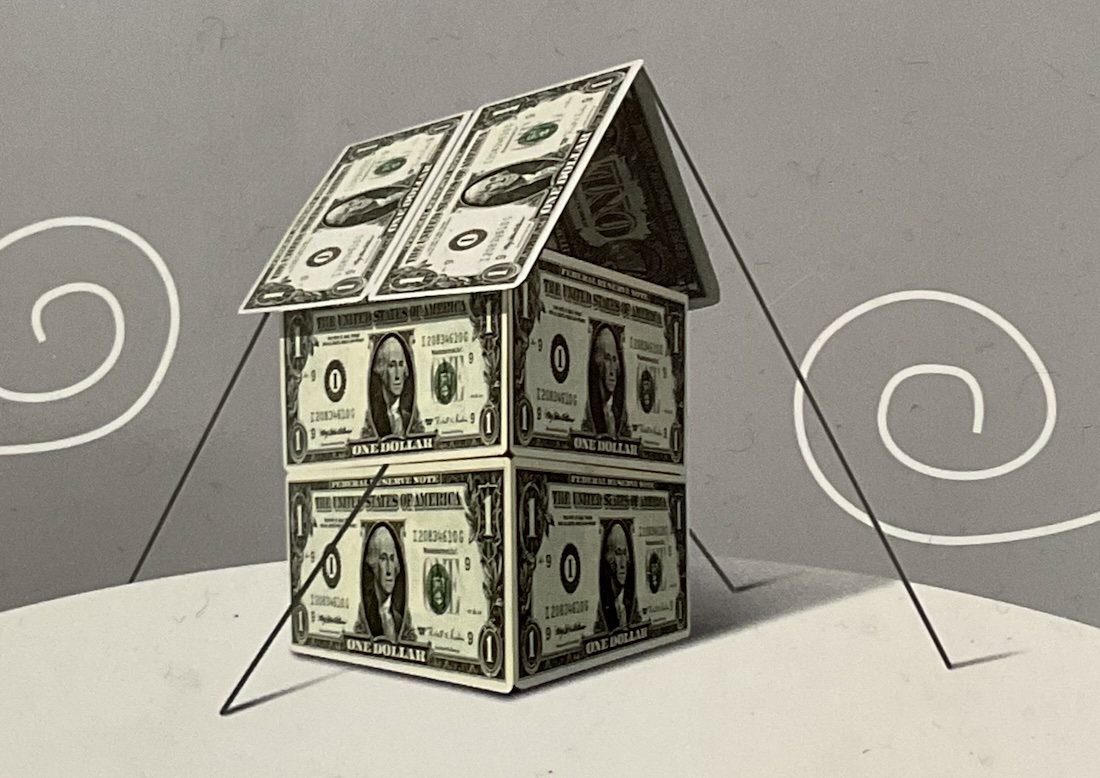
The Fed Had To Raise Rates To Stop Rates From Rising
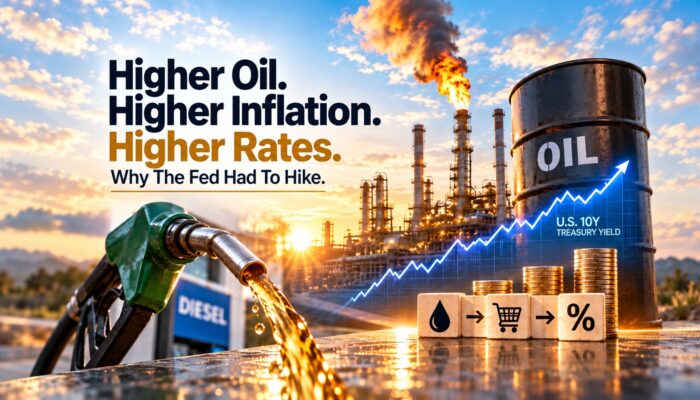
Posted September 18, 2026
The Federal Reserve raised interest rates this week.
At first glance, the reason seems obvious: inflation is too high.
But I believe something much more interesting—and potentially much more important—is happening.
The Fed had to raise interest rates to stop interest rates from rising.
That sounds like a contradiction. It isn’t.
Since February 27th, the day before the US attacked Iran, the 2-Year Government Bond Yield has risen by 136 basis points, the 10-Year by 104 basis points, and the 30-Year by 71 basis points. The 10-Year and 30-Year yields have climbed to levels not seen since 2007.
Meanwhile, inflation has moved sharply higher. PCE inflation jumped from 2.9% in February to 4.1% in May. It eased to 3.7% in July, but the renewed rise in oil and diesel prices threatens to push inflation higher again.
Diesel has already reached a record $6.29 per gallon, up from about $3.50 in January.
This creates an extraordinary problem for the Fed.
Higher interest rates can weaken demand. But they cannot produce more oil, manufacture more diesel, repair damaged refineries, or restore disrupted energy supplies.
And that is where things become particularly interesting.
In the new Macro Watch video, The Fed Had To Raise Interest Rates To Stop Interest Rates From Rising, I explain why the Fed was effectively trapped into raising rates this week, why this rate hike may not be the last, and what the consequences could be for the economy and financial markets.
But the most important question is what comes next.
If inflation continues to rise, how much further will the Fed have to push short-term interest rates—and what will that mean for long-term bond yields, the economy, and financial markets?
Subscribers to Macro Watch can click here to watch this video now.
If you have not yet subscribed, join today for instant access to this video and more than 100 other hours of Macro Watch content covering the most important developments driving the global economy and financial markets in the 21st Century. A new video will be added every two weeks.
For a 50% subscription discount, click on the link above and, when prompted, input the discount coupon code: Warsh
CLICK HERE to see a list of all the videos in the Macro Watch archive.
Please share this blog post with your colleagues and friends.