
Who Will Buy the US Government’s Next $25 Trillion of Debt?
Posted May 7, 2026
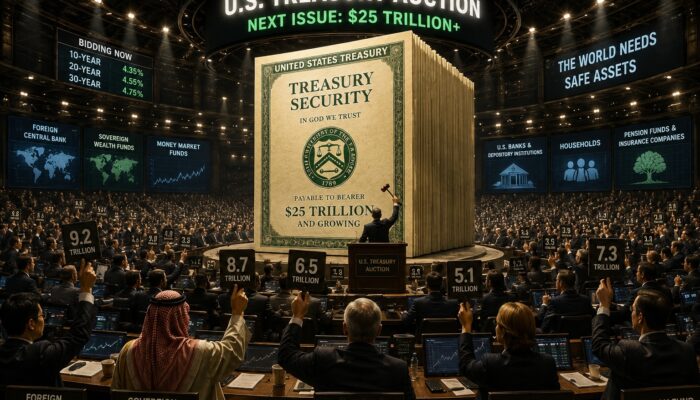
US Government Debt Held by the Public has now topped 100% of GDP. By 2036, it is projected to rise by another $25 trillion, reaching roughly $56 trillion, or 120% of GDP.
That raises one of the most important questions facing investors today:
Who will buy all that debt?
In this week’s Macro Watch video, I examine that question in detail. I show who owns the Treasury securities outstanding today and explain why many of those same buyers are likely to finance the government’s debt during the decade ahead.
The answer is more complex — and more reassuring — than many people might expect.
Government deficits themselves inject liquidity into the private sector. Foreign countries recycle dollars earned through America’s Current Account deficit into US financial assets. The banking system creates credit. Households buy Treasuries directly and indirectly through money market funds and other investment vehicles. And, if necessary, the Federal Reserve remains the buyer of last resort.
So, my greatest concern is not whether the US government will be able to finance its debt.
My concern is the interest rate it may have to pay to do so.
If globalization continues to reverse and the US Current Account deficit shrinks sharply, foreign demand for Treasury securities could fall. At the same time, replacing low-cost imports with higher-cost domestic production could push inflation higher.
That combination — less foreign buying and more inflation — could drive interest rates significantly higher, threatening economic growth, asset prices, and household wealth.
This video explains why the financing of government debt is likely to remain possible, but also why the consequences could become increasingly dangerous if inflation and interest rates rise. This presentation is 33 minutes long and offers 76 slides that can be downloaded.
Subscribers to Macro Watch can click here to watch this video now.
If you have not yet subscribed, join today for instant access to this video and more than 100 other hours of Macro Watch content covering the most important developments driving the global economy and financial markets in the 21st Century. A new video will be added approximately every two weeks.
For a 50% subscription discount click on the link above and when prompted input the discount coupon code: Buy
Click HERE to see a list of all the videos in the Macro Watch archive.
Please share this blog post with your colleagues and friends.